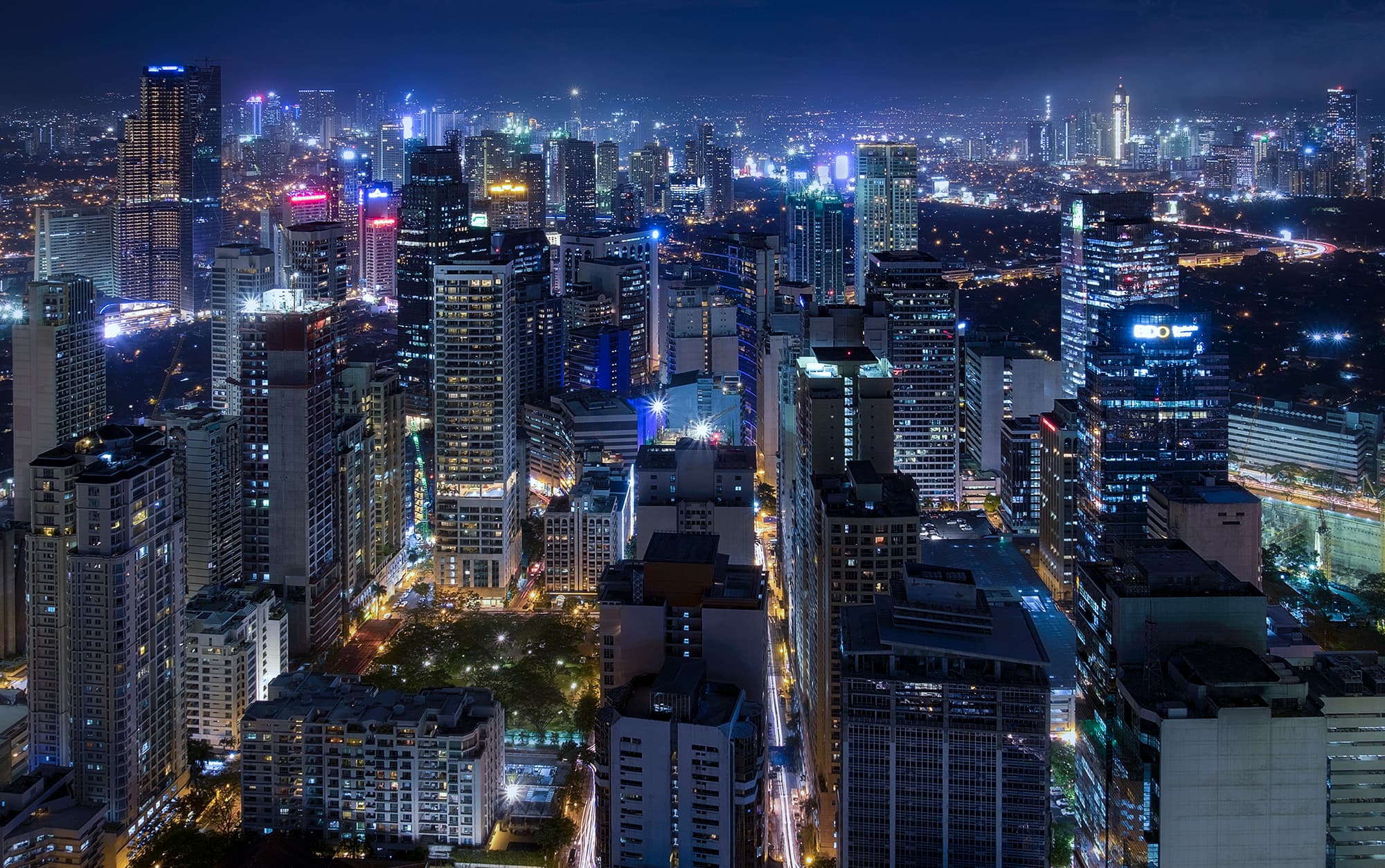
I wasn't supposed to stay long.
Manila was meant to be a stopover — two weeks to sort out paperwork, catch a direct flight, maybe eat some crispy pata. But two weeks became a month. A month became three. Six months later I'm writing this from a coffee shop in BGC with a flat white that costs less than anything comparable in Cologne, and I've stopped pretending I'm leaving soon.
The Reputation Problem
Ask any digital nomad about Manila and you'll hear the same things: traffic is unbearable, it's too chaotic, Cebu is nicer, just go to Cebu. There's truth in all of that. But there's also a version of Manila that those people never found — the one that becomes visible once you stop moving through it and start living in it.
Where You Actually Live
Manila isn't one place. It's sixteen cities compressed into a metro area. The two that matter for remote workers are Makati and Bonifacio Global City (BGC).
Makati is old money and embassies. It has wide sidewalks, ATMs that reliably dispense pesos, and a walkable restaurant strip in Poblacion that starts at Filipino comfort food and ends at Michelin-calibre tasting menus. BGC is the newer, shinier version — planned streets, no traffic tricycles, WeWork and a dozen independent coworking spaces, mall-sized supermarkets. Most nomads end up in BGC. I understand why.
I lived in both, and would pick Makati every time. It has more texture.
Getting Work Done
Internet in BGC and Makati is genuinely good. PLDT Fibr runs at 100–300 Mbps in most apartments. Globe 5G covers both districts reliably. I worked video-heavy Figma sessions daily without interruption.
Coworking options are the best in the Philippines by volume:
- KMC Solutions — enterprise-grade, multiple BGC locations, rock-solid infrastructure
- Acceler8 — more community-focused, good for freelancers
- Common Ground BGC — slick, design-forward, slightly overpriced
- Your apartment rooftop café — often the actual best option
Day passes run ₱500–800. Monthly desks start around ₱6,000. Both are substantially cheaper than anything comparable in Singapore or Bangkok.
The Traffic Question
Yes, it's bad. EDSA, the main artery, can turn a 5km journey into 90 minutes during rush hour. The answer is simple: don't live somewhere that requires you to cross EDSA for work. Stay in BGC or Makati, make those your world, and use Grab for everything else. I averaged 2–3 Grab rides per day and spent less than ₱3,000/month on transport.
The Metro Rail Transit (MRT) exists. I took it twice as an experiment. Both times I emerged dazed but unharmed.
Food Is the Real Reason to Stay
This is the thing nobody tells you. Manila has one of the most interesting food cities in Southeast Asia. Not just Filipino food — though sisig, kare-kare, and any sinigang anywhere are mandatory — but a genuine restaurant culture shaped by the diaspora. Japanese-Filipino fusion. Korean BBQ at midnight. A hole-in-the-wall in Poblacion that serves the best negroni outside of Milan, according to me and nobody else.
I spent more on food in Manila than anywhere I've lived. I have no regrets.
The Numbers
Based on six months of actual living in Makati/BGC:
| Category | Monthly Cost (EUR approx.) |
|---|---|
| Apartment (1BR, BGC) | €550–700 |
| Coworking (monthly desk) | €95–120 |
| Food (cooking + eating out) | €300–450 |
| Transport (Grab) | €45–60 |
| SIM + data | €12–18 |
| Total | €1,000–1,350 |
Not cheap by Philippine standards. Genuinely cheap by European standards.
Who Manila Is For
Manila isn't for everyone, and it doesn't pretend to be. If you want beach access, slow mornings, and the kind of quiet that resets your nervous system, go to Siargao. If you want world-class infrastructure, the Philippines' best food scene, and a city that hums with actual economic energy — stay in Manila. Give it six weeks before you decide.
The city earns it.

